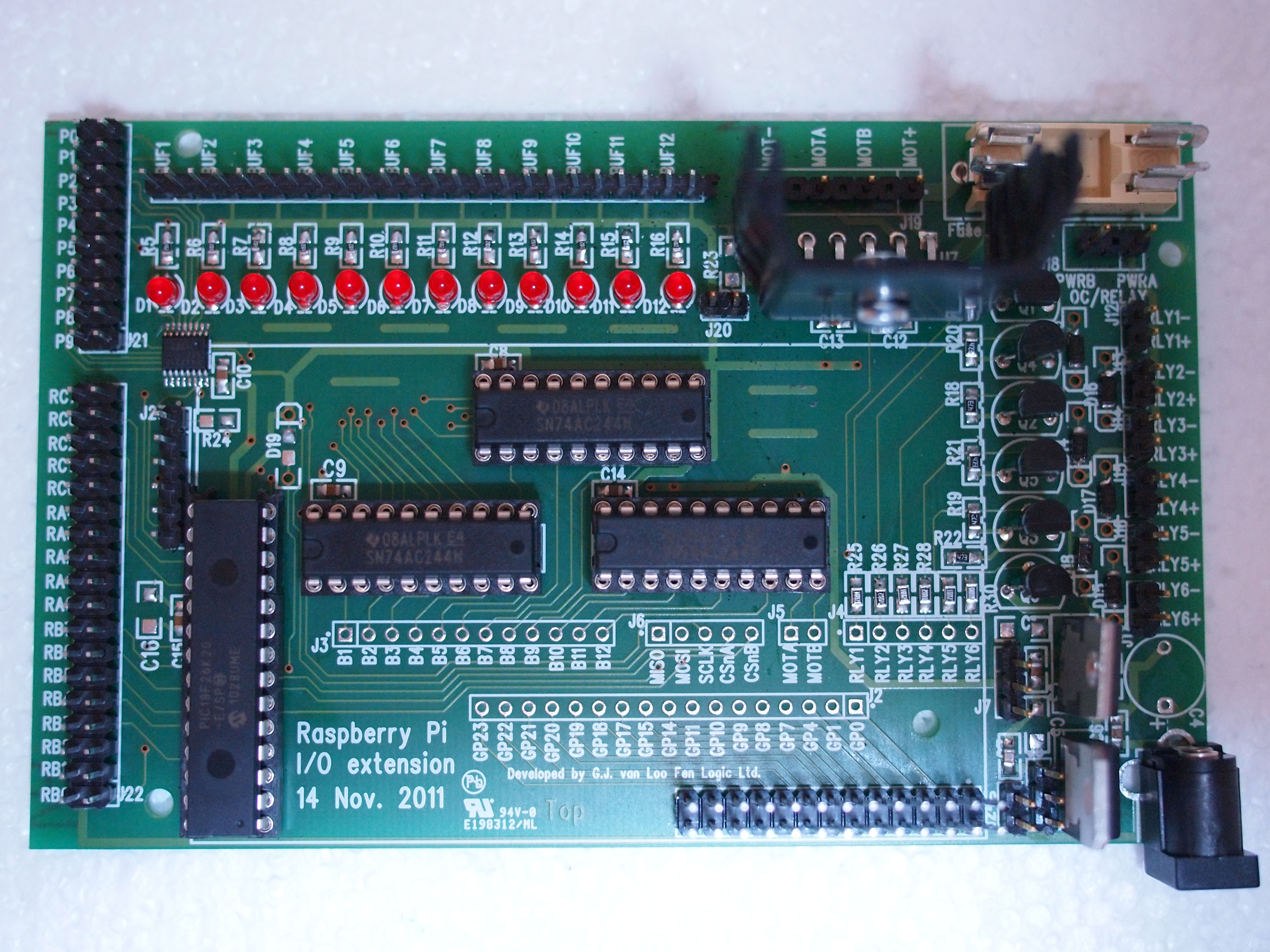
How about this for an idea… a self-contained opensource hardware midi controller with a built in ARM-based pc. The Raspberry Pi is a $25 ARM-based pc, the size of a credit card that can already run XBMC and lots of other software & operating systems.
If the Raspberry Pi was setup to run VirtualDJ, Mixxx, Bitwig or one of the dj applications for beagle board then you could very easily integrate some reasonably powerful dj’ing hardware AND software within a normal midi controller. The Pi is absolutely tiny, very powerful and incredibly cheap.
Why would you want to do this? Imagine having a midi controller that has an HDMI output. You just plug the midi controller into a screen, connect up your stereo outs to a mixer and you’ve got an all-in-one midi controller that doesn’t require a laptop. Or you could integrate a 7" HDMI screen into the actual controller (so it’d look like a CDJ2000 for example).
Or perhaps the Pi could be used as a hardware version of Bomes Midi Translator or GlovePie. You connect up various USB devices (gamepads, etc) and a usb midi device. You then program the Pi to translate midi messages into HID.
I’m sure there are other possibilities too… thoughts?
blood hell that’s cheap the video on their website showed two usb ports, one of those is where the SD card slot is on your diagram? should be able to use one usb port to connect between the device and present itself as a set of midi devices to the host pc - or over IP would also work probably? i have to get one of these to play with
yep - I’m definitely getting at least one for just this purpose. Easy to stick it to the back of an HDTV and run XBMC so that it streams videos from my server in the attic over ethernet.
This means that theoretically it might be possible to build diy midi controllers with a Raspberry Pi! The advantage of course would be that the developing environment would be the midi controller itself!
i see prices are in GBP tho… if they’re from the UK then hopefully we won’t get stuffed for a higher price compared to the US like we usually do… awesome
its a UK charity that’s making them - they’re intented for kids in schools to learn about programming computers & electronics (kinda like the old Acorn BBC computers in the 80’s). The charity has David Braben on the board (the guy who wrote Elite). Oh, and the plan is to sell the more expensive Pi for just £22:
The intention is to actually make the Pi in the UK at some point in the future as well…
This has the potential to be pretty cool, but to my understanding, it’s currently rendered useless by Android and the ARM chip. Unless you’re going to write Core/Directaudio for Android (Google would have a permenant position for you), and then port your software to an ARM based architecture (I’m not sure if that’s even legal), it’s not going to have any practical purposes at the moment. It is, however, one of the greatest ideas since the concept of the CDJ, and really needs to get snagged by hardware manufacturers (think that new Stanton console), hopefully not getting bogged down by GPL nonsense.
You’re telling me that a 700mhz ARM chip is going to run open source perfomance software over Linux low-latency drivers, and be stable enough for serious performance? This is a great concept, one that should be expanded on like the CDJs and SCS.4DJ, but the current hardware doesn’t seem up to the task. I typically run standalone Maschine comfortably at 20ms, over CoreAudio on my 2.3 C2D. I have trouble believing that current Linux drivers could get anything close to that on an old smartphone, especially considering the software side of it. But I could be wrong, or my standards are just a bit high.
I can’t imagine a CDJ has any more than a 700mhz processor, the iPhone (3gs) is 600mhz and works perfectly with a dual deck DJ application with beat detection eq and other toys?
It’ll depend how its programmed, how slimmed down everything is going to be and how many background tasks are running.
I don’t think you can compare the Maschine Application running on a Mac to a CDJ style dedicated software running on a box its been designed for.
don’t forget the Pi has hardware decoding for video/audio so the ARM processor speed doesn’t necessarily matter as much… just look at XBMC running 1080p videos perfectly on the Pi


 the video on their website showed two usb ports, one of those is where the SD card slot is on your diagram? should be able to use one usb port to connect between the device and present itself as a set of midi devices to the host pc - or over IP would also work probably? i have to get one of these to play with