So ive been djing for about 2 months now, and im becoming more and more serious about it. So how long should i practice a day? or a week? until i get bored or what? how many hours should i mix to get better? ALSO i find myself getting very bored when putting cue points on almost all of my songs i mix, is this supposed to be not fun? becuase i know it needs to be done to make amazing mixes.
I mix for around 30 minutes a day. A bit of that is trying new stuff, mucking around with cue juggling and stuff. I spend around 3 hours listening to music, and during that I’ll sort of mix in my head.
Weekends I’ll try and get a 1 hour+ mix done, and then listen to it to see where I went wrong.
Setting cue points is alright for me, as I do it while I’m listening to the tracks, and I have predetermined places for them normally.
So just mix whenever you can, if you find yourself getting bored maybe DJing isn’t for you.
That, added to the time a cannon takes to cool down, the whole lot being divided by the age of the captain.
I know of some who have been at it for years yet still can’t mix instant coffee despite having top of the range equipment. A friend of mine never grasped the concept of beatmatching, I have seen a lot in the same case…
Someone on these boards is the perfect example of that, he’s called German, or Batty or something. Can’t really remember but his 2001 odyssey mix was unspectacular to say the list
I still have 2hours+ sessions many times a week aside from gigs. While I consider my technique excellent, I still have to learn incoming new tracks. From my experience: learn your music, and the rest follows
Greetings all, long time lurker here. Agree with the above. It’s interesting reading forums such as DJTT/NI etc, I’ve noticed quite a few differing questions but all have a similar theme of concern in the DJing minutiae (what kit, mixing, beatmatching, general DJing techniques, should I be doing this, what to play etc) and losing sight of actually getting stuck in and practising, listening back, getting clued up on tunage, developing your ‘style’.
This isn’t a criticism at all and not aimed at the OP, just a general observation. I wonder if it’s down to the advent of digital DJing, with all the advances in tech and capabilities of it. Not wishing to sound like a dinosaur but when it was the case of 2x 1210’s, a mixer and a pile of vinyl, it was simple, you started as a newbie, you learned to beatmatch, grasped song structure and phrasing, track key, scratching, recorded mixes, listened to other mix tapes, get to know your local record emporium, meet other DJ’s/club promoters. Many of these core skills are still the cornerstone now but there seems to be a rush now to be knocking out spectacular mixes with all manner of fx and button mashing.
IMHO, worry less about the detail, more about the learning and practising and enjoy it.
Dont spend your’e time just practising.
That crave digging time is imo even more important.
DigitalDj-s probably think its all about the practice and how could you mix. When you got the right music then you have already got it 65% right.
Just spend more time with your music and practice as much as possible.
My mentor dj was telling me when ı started this awesome hobby of mine.He told me to make set s and more than sets just make playlists.I make playlist nearly everyday for that day and ı listen and learn those songs like my name and after that mixing seems much more easier and and so does the cue pointing.
I am very new to the forum but if you need advice ı can tell you that more than mixing and stuff , just listen ad enjoy yourself as much as you can then start playing with the tracks and you will see that the time will pass incredibly perfect and joyfull.
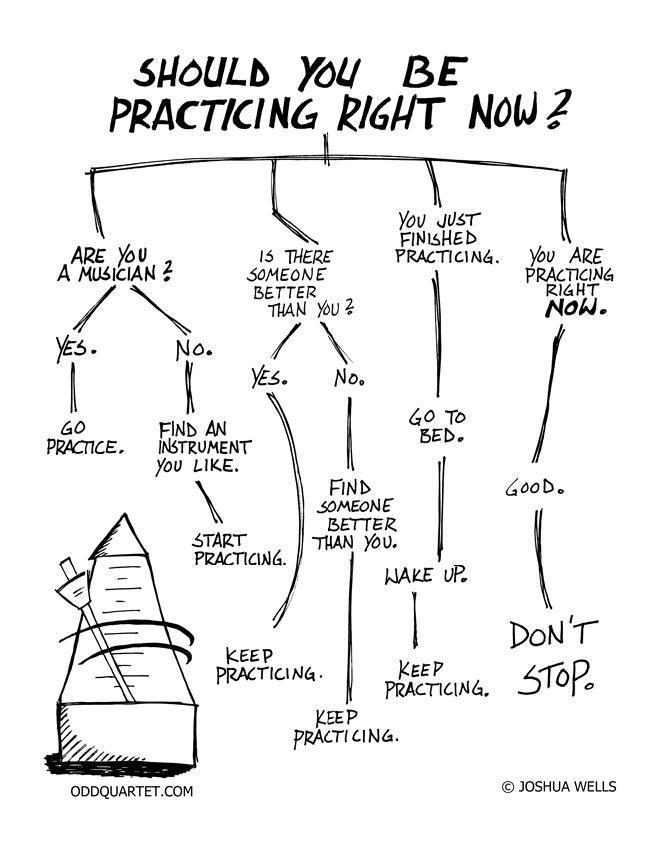
You should practice for as long as you can, as often as you can. And when you can’t practice anymore, practice some more.
You’ll find that you suck less after every practice session.
Spend less time researching and trying to learn how to DJ, and just stand in front of your gear and PRACTICE. You’ll learn more from pushingh buttons (and making mistakes!) than you will from reading forum posts!
Trial and error is one of the greatest ways to learn. (I learned this the hard way - I used to research, and research, and research - I’ve wasted WAAAAY too much time on forums trying to learn when I could have been spending time with my gear LEARNING!)
Preparation is hugely important. The problem is, preparation is boring - so if you spend all of your time preparing, and not actually DJ’ing, you’ll lose interest. (I learned this the hard way too!).
Develop a system for preparing your tracks, and stick to it. Spend 30mins/1hr a day digging for tracks and save 'em to a folder. Then, spend a couple of hrs on a weekend going through those tracks and bin the ones you don’t like, and tag/prep. the ones you will keep.
Make sure you have FUN. Jamming with a bunch of new tracks is awesome.
Keep a pad next to your gear and make notes when you are jamming of great transitions/tracks that go well together. It’s these notes that you will use for creating a killer 70min mix.
this is great advice! i always have a pad with me, whether at home or playing out, you never know when you will pull off an amazing transition that you want to do again. i even have a pad within reach when im watching tv, so many times ive heard a track on a tv ad and its reminded me of it or its a new one that i havent heard. always handy!!
I mix between 3 to 10 hours a week and have been for 11+ years never pre plan always improv because of this I can on average mix any track on beat in phase and not botch it. For the past 6 years I’ve rarely mess up a mix and the invention of looping makes a slightly off mix easier to make a spot on mix. I also have been a digital dj for many years now but still can go back to vinyl in a flash with no issues.
What I do these days I would not call practicing technique more so practicing the tracks.
Biggest challenge for most was beat matching since about everything has a bpm read out to get ya close this has become almost a not needed skill but can always tell then someone can’t because something’s usually off.
In closing practice without beatgridding and forget there’s even a sync button. Use your jogs if you drop slightly off to adjust.
I set a 32 loop with my x1 at intro of track and mix that in with 2 mins left slowly working the eqs then since most intros are 64 I wait till 64 before the track is going into outro and kill the loop slam low eq when intro ends and outro starts and taper off the ending track. This technique yields a set that’s constantly moving leaving very little just percussion time.
This recipe does not work for everything as some tracks only have a 32 intro but adjusting as needed as you get the hang of it…
This is how I mix my transitions keep in mind don’t try mashing up every track you mix although fun until you get your basics down it won’t sound good. It took me ears to be able to do a 60minute set where there is less then 10 minutes total that only one track is playing. Being able to do live mash with traktor/vinyl/cdjs is a hard skill atleast for me.
In most my sets I try to do atleast one live mash just because I can
When asked when to practice one phrase comes to mind “You get out what you put in”. You practice as much as you want, to achieve the skill level you desire. As much time as you put into it in general is how much skill you will learn in the long run. Just my opinion
No set hours. Practice smart, rather than hard. Practice all the basics till you get em down.
beatmatching
phrasing/counting bars and incorporating that with your beatmatching
cuts
a few basic scratches
Once YOU feel you are comfortable and YOU think you have a built a good enough library. Go out there and do a gig. Find out your weakness. Work on that. (rinse and repeat till you finally retire)
how long is a piece of string… travelling at the speed of light? know the answer to that and you will be ready or really really high
practice until you aren’t having fun, when that happens stop otherwise it will become a chore and you will quit… you beginners need to take your eye off the big picture and just have some fun
Thanks for the tips. I appreciate people who are helping define what they mean by “practice” - a lot of time can be wasted doing the wrong thing or not focusing on what needs the most work.
What’s a good improv to planning/perfecting ratio? I really enjoy just spinning, but I know I’m still working on the basics and flub transitions. How much time should be spent mixing on the fly vs. really perfecting transitions between two songs for a set?