How to create melodies, bass lines, chord progressions etc.
Hello everyone, I’m new around here and relatively new to the world of producing as it is only about 6 months I’m doing it. Every time I am producing I try to create melodies or bass lines but they always come out bad and so I discourage myself as I can’t produce and come out with something that sounds good. Anyone has any advice on what I can do to start and do at least good sounding melodies or bass lines (I am using cubase 8.0).
I’m not saying you are asking a stupid a question - pretty much everyone who is good at producing had to learn these things out there. However, there is already so much out there. Just google “writing melodies” and “writing bass lines”. You’ll find TONS of material to learn from and practice.
If this is not what you’d want to do than just don’t worry about it and keep doing your thing. There is nothing wrong with making bad music as long as you have fun doing it. And if you are not even having fun doing it than be happy it is not your job and leave it (for a while?).
It sounds to me like you would benefit from a music theory course to get the basics. I highly recommend the free music courses available from Coursera - I haven’t taken their first level music theory courses, but I have taken a few of their upper courses and can tell you that if you are willing to do the work, you will learn.
Your best bet would be to find a song you really like, and try to recreate it using it as a reference track. It won’t sound exactly the same, but learning to mimic their drum patterns and bassline melodies will open your mind a bit and introduce you to new patterns. Plus it’ll help you build a “full” track which is something newer producers seem to have trouble with when just trying to make something from scratch on their own.
Learning music theory is a great step to take, but it honestly isn’t going to flip a magical switch in your head and unlock a secret hidden book of melodies. You’ll still have to deal with the trial and error of adjusting notes in a 4 bar loop(or however long your bassline will be).
This is what I started doing, and honestly it’s brought me a bit of success.
Don’t beat yourself up. It’s one of the more difficult things when you’re starting. With more time and experience, you begin “hearing what you want” in your head and can duplicate that.
I’d recommend using a controller to just bang some stuff out and record the MIDI. Some music theory will help to keep it in tune. Legowelt has a video where he just bangs out a bunch of MIDI “nonsense” in clips then loops it and modifies effects/synth parameters to it. Remember melodic interest is not just in the notes and intervals between them, but the rhythmic aspect of it - which includes the velocity changes in each of the notes. And this is why I recommend trying to do it on a keyboard or controller with pads - doing so by clicking in a piano roll on the computer takes a lot more work to get something interesting.
Have looked at it, it’s extremely light compared to what an experienced producer does, but it does look like it would give a good leg up to folks who don’t have a solid theory knowledgebase.
+1 for Coursera. Learning happens by doing the work, not by showing up.
Do not be afraid to build simple songs with loops and presets. No, this is not what you want to be doing long term, but as a way to start making something - it is remarkable how much can be achieved with the samples, loops, and presets that come with most DAWs.
Old school books on drum machine programming have hundreds of proven drum patterns that you can use as a basis for your own songs.
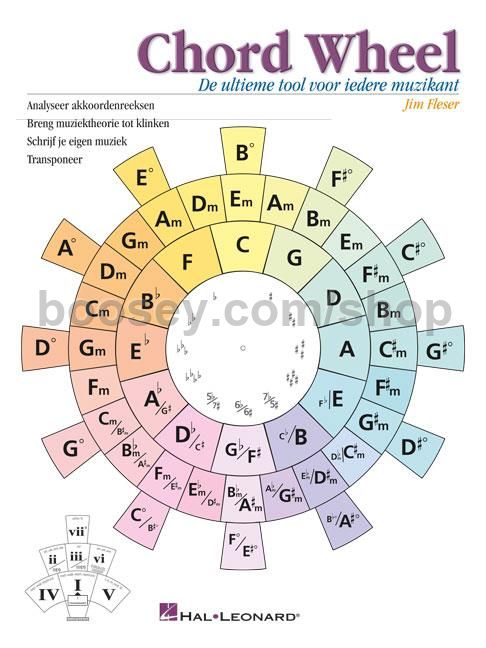
Learn enough music theory to get comfortable moving between chords and Roman Numeral notation. This requires a relatively solid understanding of music theory - but helps immensely when watching tutorials, etc.
I’ve actually just bought Odesi and I made my first melody in about half an hour, I think it will really help me, thanks everyone else for the good advice.
I’ve been doing music theory for a long time, and would certainly second everyone else’s advice about taking a class and what not.
But something you can do now, try this - if you understand notes and where they are on your keyboard - map basic notes using small stickers / erasable marker dots. The notes you select should be arpeggio’s, which you can easily Google different arpeggio’s online. Don’t worry about playing the notes in order, just use only those specific notes when writing. Obviously making it non-damaging for your keys would be recommended
What’s cool about arpeggio forms, is that they will give you scale / intervals, which help with melody development.
Search for stuff like for following, and note that I include some jazz scales to make it cool. Happy writing!
“a minor 7th arpeggio notes” - Uses notes A, C, E, G