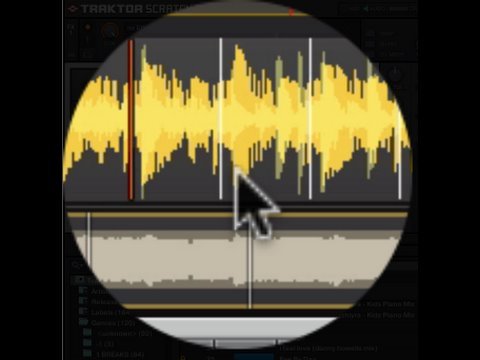
Serato Vs Traktor

Serato Vs Traktor

Hello long time lurcher first time poster… I used to DJ up until retirement in 2001 and a friend of mine asked if i wanted to be involved in setting up and internet based radio station. Now technology’s moved on dramatically since i retired. I was a 2 turntables and a mixer kind of guy! So i have missed CDJ’s. But I’m getting into the laptop/midi controller side of things. Therefore I’m now looking at getting back up to speed. I would like to keep my turntables (for nostalgia purposes) So I’m looking at DVS one of my friends has serato which i have used numerous times and really like the interface etc… Now i use Traktor Duo as i have an Audio 2DJ soundcard… I have been looking at Scratch Pro and their DVS

So which is best? Any Pro & Cons I have read reviews and I must say my feelings are mixed? So if any of you pros and people in the know can help me swing it I would really appreciate it!

Thanks in advance

If you’ve already got the Audio 2, then it’s kind of a no brainer financially…

Traktor… don’t look back.

TRAAAAAAAAKTOR!

:slight_smile:

That’s if you want to learn to do more than just jam TT’s.

If you only wanting to jam TT’s…serato would be more in line with what you want to do.

Traktor you can also jam TT’s only, but you have scope to do SOOO much more.

:slight_smile:

Damn straight. Just got my control cd’s from berlin today. Boom

you could have DLed the wav…

:slight_smile:

True that, but got them a plus an x1 bag for $80 nz delivered so basically free anyway mate ;p

Thanks for the comments

I was swaying more the traktor way anyway.. like you said i can do more that just turntables.. So i was also looking to get a Kontrol X1 or can anyone else recomend anything else?

Thanks for the advice guys

Sorry mate, yes definitely go the traktor route. Haven’t had a chance to test out my x1 with the timecode setup yet but would be perfect for you i think. Even has a serato overlay and mapping if you wanted to use it with your mates’ setup also.

Thanks Again

Cheers for teh advice thats brilliant… Looking forward to ordering my new kit! cheers

Another satisfied customer…

:slight_smile:

Well if your getting in to the midi controller side of things but still wanna spin some vinyl here and there, thenTraktor has to be the way to go. While you can control Serato via midi, the software really still is in it’s infant midi years and when compared to Traktor, Serato’s midi offerings are incredibly basic.

Traktor started off being controller based, hence it’s most powerful but yet most understated tool is it’s midi mapping, seriously your imagination is the only barrier to what is possible, Eans like many overs on Techtools have proved this with epic VCI 100 mappings. On paper/numbers/features, Traktor simply destroys all competitors, fact!

But you’ll often here Serato user’s crying the tired mantra “stability”, yes Serato was really the first (four plus years ago) to do DVS properly, but things have moved on and rival DVS software like Traktor hasn’t just caught up, in my opinion it’s over taken. The Qbert vid posted above shows the difference with Traktor’s timecode using a 2 kilohert carrier code, where as Serato only use’s 1 Kilohert, in pratical use you really can’t feel the difference between the two, but you can certainly hear the difference.

Trakors Audio 8 or the Audio 4 interface wipes the floor with the Serato Rane interface. When you buy Traktor Scratch Pro you get a powerful soundcard that gets the best out of MP3’s and can be used with any software. With Serato you just get a Serato interface with no 5 pin midi in/out and less inputs/outputs.

Another thing you will here Serato’s user’s go on about is the layout or colour waveforms. It’s really down to personal taste, but I prefer to look and consentrate on my decks/mixer or midi controller rather than gaze at pretty parallel waveforms, personally anything that make’s you look at your screen for longer is a very bad thing in my opinion. I find it amusing when folks base there argument on the GUI, of course people are going to prefer what ther use to, but it doesn’t make a different layout bad.

In the not so distant future Traktor will be getting the new Traktor S4 features, which I’ll let you look up rather than me try to sell.

Yes Serato recently gained the new program the Bridge, which allows Serato and Ableton to work in supposed harmony. To be honest alot of what the Bridge does is allow Serato to work with Abelton, which in a number of ways Traktor already does very well.

very well said!

I was in your shoes a while back. I stopped DJing around 1999 (two 1200’s a and a mixer) and a while back got the bug to start playing again. I’ve used both systems and I think the single biggest advantage that Traktor has over serato is that you can use it as a DVS or do some serious damage with midi controllers. Having that flexibility means I can show up to a friends house with a backpack and rock a party, or with a sound card and laptop and play on a house system. That to me was huge. The rest of the stuff is all preference, whether you use 3-4 decks, do you need a ton of effects, do you prefer stacked waveforms or colored wave forms, do you need a video plug-in, etc. In the end all of those things evened out somehow. For me both systems each are missing something the other has, so I chose the more portable one. I’ve used Itch quite a bit lately, it’s the closest thing to two decks and a mixer – very user friendly, easy interface, fun to play, it’s fundamental DJing at it’s best (with a controller)…….but after that, it’s missing many of perks that Traktor and SSL have.

+1 for Traktor Scratch Pro.

I’m an old vinyl junkie as well. Been using TS and TSP for about three years. It works great.

I’ve been using Traktor for years. I switched to Itch (and probably will pick up Scratch Live here soon to use The Bridge).

Here is why:

  1. Variable beat gridding. Traktor simply cannot do this. The recommendation is that to make up for this you put a track into Ableton and warp it - or loop in and out of steady intro or outro. Both suffer from a bad solution to what should not even be a problem. Serato’s approach allows you to stay in sync while not losing the feel of a track.

If you are DJ, I would think this would rate very high in your estimation what to use since, at the end of the day, it is about the music you are playing.

  1. The colored waveforms are simply a reference. No one “gazes at them” as was said above. I didn’t get them at first and wrote them off as gimmicky until I realized their value, which is: Red colored waveforms show that low end is what playing (or will be playing), the other colors give you sense of what else is found in the song (i.e. midrange and treble) with Green and Blue.

This tantamount to having information found when looking at vinyl with a break coming - but even more information (and in this case, better information than what Traktor provides in its monochromatic waveforms).

  1. Playlist/Crate management is superior than Traktor. Sub crates, preparation crates, doing all this on the fly while playing… this is essential DJ workflow when you are actually working a room and need to adapt to what is working vs. what isn’t via track selection. Exporting is great too and easy to manage.

Those three things above are crucial and fundamental functions to anyone djing and really working a room IMO.

I think the controllerism of TSP is great. I loved it for along time but found that at the end of the day, I was doing certain things that didn’t require huge custom mappings that TSP allows - and which Serato’s Itch has covered in their 1 to 1 mapping to hardware made available.

My take on the choice is that TSP is evolving to eventually compete with those who have the instincts of DJing but use Ableton Live (hence the S4). Serato has chosen to start with the fundamentals of DJ workflow first and foremost and each program shows their DNA in that way.

Finally, I think the integration of Ableton Live with The Bridge cannot be underestimated. It really is a huge step forward that the S4 cannot really compete against (until possibly NI takes a more serious look at how to integrate Maschine into TSP - and btw, I own all of the above programs. Used them for years, except for Serato which I disregarded for a long time until I got frustrated with Traktor’s inability to have flexible beatgrids and checked out Serato to see what the fuss is about).

Serato is an elegant program where the whole is greater than the sum of its parts.

Each to their own, but the points I’ve made above should have some relevance to working DJs who have experience in actually playing rooms and rocking parties (EDM or otherwise).

.02

I’m pretty sure traktor can do this as well.
Here’s Ean Goldens tutorial about it:

Jdog - sorry brother, it can’t. Not “1) Variable beat gridding.” you can adjust the beatgrid as a whole, but you can’t drop multiple beat grids. You can’t grid the begining of a song at 126bpm and then 119 if the an acapella slows the song down and then back to 126bpm once it picks back up.

I agree with everything Rob has stated. I think you and I have discussed this over on the Serato forums.
I can’t stress enough and echo Robs statements on the waveforms.

The colors provide you information on the track and the grids are far superior to what traktor offers. These two things are the ONLY two things Itch has over Traktor, and I’ve stuck with Itch for sometime simply because of these two features. However, I think the S4 will offer so much more than what Itch currently offers and there is no real word on when the future 2.0 update will be released.

Understanding what Abelton offers and what the Bridge will be capable of doing “for me” I still prefer the set up of the S4. I am not an ableton guru — so in order to use the features of The Bridge I have to buy another software, learn, and set up those features on that application so I can use them it Itch. The S4 sampler and the effects in Traktor for my needs are plenty and they come in one solution and simple work flow. It just makes sense.

I’m a big fan of Itch and hoped they would’ve kept up with Traktor and S4, but they haven’t. If I had to simply choose Traktor or Serato at the moment I’d pick Traktor……but wish they would implement the colored waveforms with flexible grids. That to me would be the ideal system.

one other advantage that TSP has over Serato’s Itch are the effects as well. The effects in TSP are pretty stellar and the way you can customize them in the interface via selection is great.

Just trying to be fair here. I think DJing fundamentals goes to Serato and the customization/track deconstruction leans towards TSP.

At the end of the day, use what works for you - and what helps you move the dancers on the dance floor.

genuinely curious about the above point

what is the difference between what youre talking about and whats presented in this video?

he drops multiple grids, but on an intro / outro comparison. not trying to be argumentative, just curious