Rane MP2015 4-channel Rotary Mixer

[QUOTE]It was recalled due to a manufacturing defect apparently. They’re working on a Mk2 which will be out later in the year…
[/QUOTE]

They really stood by their customers on this as well, allowing them to keep their existing mixer AND send them a new MK2 in March / April when its released.

Someone mentioned it was an issue with the MK1’s phono preamps (which wont affect everyone) - but its hard to find anything concrete.

Alot of people seem really happy with it - hell, its 1/4 the price of the E&S even if you do need to change the knobs :stuck_out_tongue:

The Rane Really is a different mixer, for people with different needs - Once you factor in the extra 2channels, soundcard, Isolator etc .. It starts to look like a really reasonable price.

If I had the cash, or owned a club I’d be onto this in a heartbeat

I’ve seen those before, but theres no EQs. Unless you can add them another way. Are you doing that?

Looking forward to the writeup.

Most of us old skool rotary guys don’t use EQ’s to mix, so it’s not that big a deal. My Bozak and Urei don’t have EQ’s on them either, although they do have a bass and treble knob. I plan to use Traktor with the Bozure, so I can use the EQ in Traktor if I have to.

Find some of his videos/recordings and you’ll wonder why DJ mixers have EQs. I enjoy mixing without EQs and think they’re superfluous. Pano basically proves it.

Smaller footprint, less expensive, 2-channel variant concept for those not requiring 4-channel mixing (in other words, the vast majority of DJs) >>> Rane Empath MKII 2-channel Rotary Mixer

Eq’s are a great addition to a mixer if not over used. Sure you don’t ‘need’ them but they can help with soft or loud frequencies that need a boost/cut, or they can help clashing kicks in a similar way you could deal with layering samples in a DAW. There is something to be said about choosing the right tracks that fit well in the first place which is perfectly valid but for playing old vinyl and doing transitions between two different styles of music they can help you get to A-B without things sounding as messy. Different strokes though.

One thing different about Rane mixer I have wondered about is the gain pots. Most rotaries I’ve seen don’t have this and it was my understanding that the rotary pots in place of regular faders are pretty much your gains and you wouldn’t necessarily crank them to 10 when mixing. Is this the same with Rane rotaries?

http://www.digitaldjtips.com/2015/01/namm-2015-video-rane-mp2015-four-channel-rotary-mixer/

round 4:00 when he mentions having maschine and traktor going at the same time

quite interesting the Rane product guy is bigging it up with Traktor so much… and that it isn’t natively supported by SDJ out of the box…

also, those knobs. mmmmmm

i-> this and in the other video being shot with another dj they also speak of Traktor and not Serato. Interesting indeed.
PLease let it be Traktor Scratch Certified NI & Rane, please!

I just picked this up on Ebay via special order under $3000. Lets see how it goes…

Yeah, that’s how you run them. I run my 2016 like that with the channel gains pegged to 10/10 and just send a quiet signal out of traktor. There’s already enough dynamic range in digital audio that this doesn’t lose anything…and if you do it at traktor’s channel gains (which are still active on external mixing and with the mixer hidden from view) it actually makes traktor’s effects sound better. My stuff is set up so all of traktor’s channel gains are at -16, traktor’s output is at 0, rane’s input gains are 10/10, and the songs I play usually wind up at 7-9/10 depending on how loud each song is. Rane’s master & booth outputs vary based on how loud I’m playing, but I’ve never needed to turn either control up to where it’s boosting (unity is at 8/10 like on the channel gains; same pot, just a noisier circuit). And, really, I only do that if I need to boost/cut an entire mix (e.g., 3 songs playing, need the whole thing quieter but want the same relative levels) or as a shortcut to crawling behind my monitors to adjust their gain controls.

The 2015 is digital and using 32-bit float internal math. This means that it will not have any meaningful dynamic range limitations. 16-bit digtial audio (after dithering) already represents enough dynamic range that turning your speakers up enough to hear the digital noise floor over the speaker’s noise floor would make 0dBFS peaks cause instant hearing damage, at least. 24-bit audio played the same way will cause physical injury or death.

So, as long as they chose a good final output DAC, the mixer won’t have any dynamic range considerations unless you’re specifically trying to screw it up (or if you actually turn everything up enough to distort, at which point someone should take the mixer away from you and never let you DJ again).

It has gains so that you can hit the EQs & Filters with the right level for them to sound as the designers intended. That’s at least functional (on the 2016, they’re literally useless if you’re using modern sources and equipment that’s not broken).

My question is how that will interact with the sensitivity of the channel levels. Rane has said before that they want people to mix all the way to 10/10 like the 2016 was a line fader mixer, which I think is stupid.

Fortunately, again, the 2015 will have functionally limitless dynamic range. So you’ll be able to use the channel levels however you want, assuming the curve is good enough, which is probably is. The EQs and Filters need a signal at about the level they were designed for. The mix bus won’t care if all your tracks are at -5 or -100 until it gets to the pre-DAC output gain control, which is probably what the master/booth pots are (they might be post-DAC, at which point that changes…a little).

I think that for a mixer that’s obviously designed to attack both A&H & Pioneer, it’s a good choice to make it this way. The sixty-eight obviously didn’t win. It’s kind of an “also ran” more than a real contender. This…seems like it could be a real contender. And if you wanted to, you could run it like a pioneer (mixing to 10/10) or like an oldschool rotary (mixing to 8/10) with no real difference in sound quality.

I don’t like that it has channel EQs and filters; I kind of prefer not having them. But…they’re there. And most of the DJ world disagrees with me, so it’s the right way to go.

It’ll be a while until I get around to buying one. And I’m probably never going to get rid of my 2016s. But I really can’t find a fault unless Rane made a really dumb mistake (like a bad curve on the channel levels).

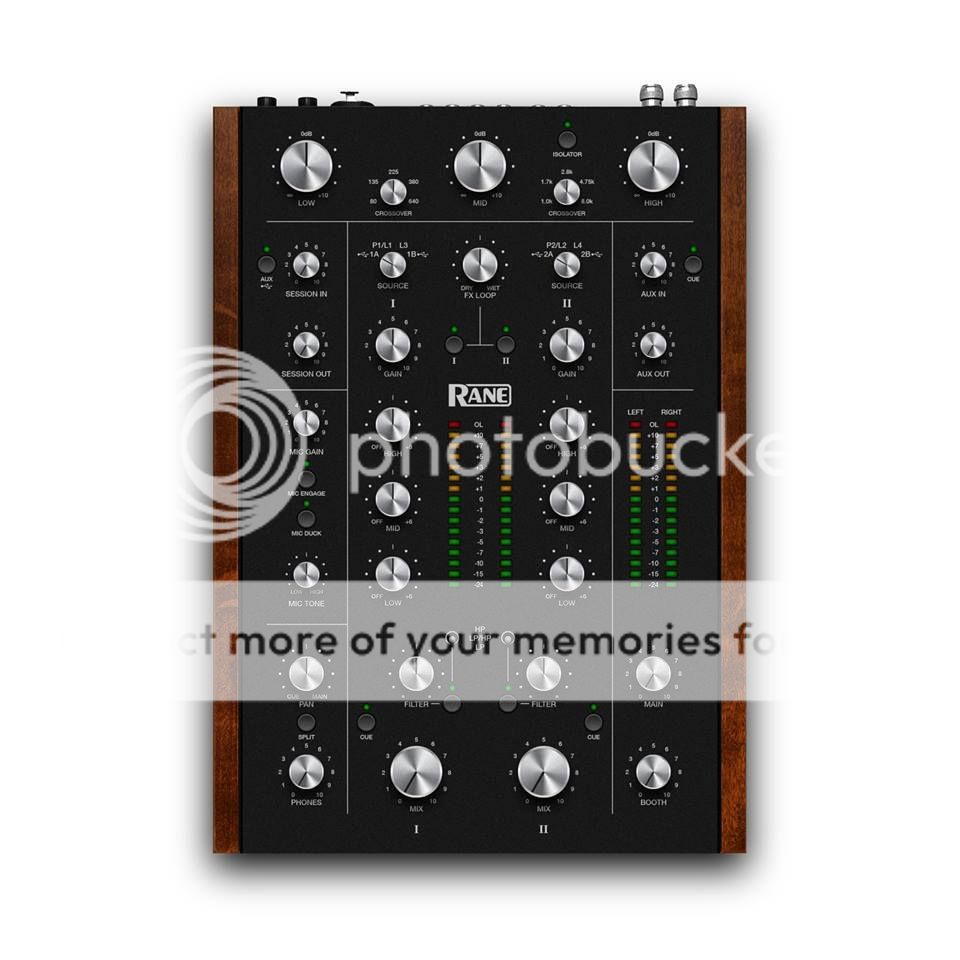
Despite the MP2015 not having SDJ support (which really sucks for us SDJ users), I went ahead and pulled the trigger on one figuring it’ll eventually get added.

Not digging at all the need to add the additional D/A conversion that comes with having to use an SL4 with the MP2015 (not to mention the extra cabling required to connect it all). Signal should remain digital the entire path up until the mixer spits it out analog.

@Mostapha Thanks for that info! I think this is one I’m going to have to test drive for sure. Considereing the price and have never used a rotary before a good solid mix on one is in order before I pull the trigger.

@[O/][iii][O/] Congrats! You might as well by some CDJ’s now and use the digital in’s :wink:

I think this will get Serato support down the line.

Negative on CDs. Never went the CD route. IMO moving media in the digital realm makes zero sense and has been dead for quite some time now. I’m strictly vinyl and DVS (SDJ to be exact) – or the occasional flash drive filled with a handful of WAVs for very short sets on CDJ equipment that isn’t mine.

The more I look at this mixer, the more the word “perfect” comes to mind for how I want to mix.

I really want to try one. And, yeah…if it fits your style, rotaries are awesome. I knew this when I started DJing somehow, but I didn’t really get it until I bought my 2016. I won’t go back.

Same here. Been using quality rotary mixers for decades and will never purchase anything but. Of course I’m regularly forced to play on linear fader mixers at many gigs that aren’t using my gear and make due just fine (because let’s face it, Pioneer DJMs have become ubiquitous for some unknown reason), but it’s like going from a Porsche to an old pickup truck every time. :cringe:

@mostapha: If you don’t mind me asking, which version 2016s do you own? 2016, 2016a, or 2016S? Also are you using the MP/XP combo or just the MP?

@mostapha: Do you ever use a separate outboard isolator with your 2016 kit? If so, what kind(s)?

It’s an s, the current production model (well, as of last year). I don’t have the XP (didn’t want it), and I don’t currently own an isolator. The built-in isolator on the right side of it works well enough for my taste, but I hardly ever touch it. The big draw to me is how simple it is and how it forces you to make sure your phrasing and phasing are right-on, which IMHO leads to better mixes than being able to “fix” things with EQs, filters, and Isolators.

(warning: blasphemy coming…I actually use it to DJ with Traktor and X1s)

I do have one of my X1s set up with a pair of the filter effects, so I can use filters as an effect…but I don’t actually do it all that often. After owning a xone for a while, I just got sick of the sound of filters.

(/blasphemy)

I was slightly concerned about the internal power supply compared to the a model, but I can’t hear any humming or noise with my current speakers. I don’t really like the original because I want to be able to mix with IEMs and prefer a cue/mix control for the headphone signal, which is also the ultimate reason I didn’t have a Urei 1620 rebult instead (that and a few hundred bucks that don’t matter over the expected life of the mixer).

Really, upgrading to the 2015 isn’t even about the filters/eqs to me…I’d probably never touch them. It’s a question of whether the improved audio quality is worth the more cluttered-looking mixer. But, it’ll be a while whatever I decide…gotta buy a house and a bunch of other things first.

From the science museum? :smiley: Looks cool though, wood!