Rottary Mixers
Yesterady i saw a boiler room episode with jamie xx (
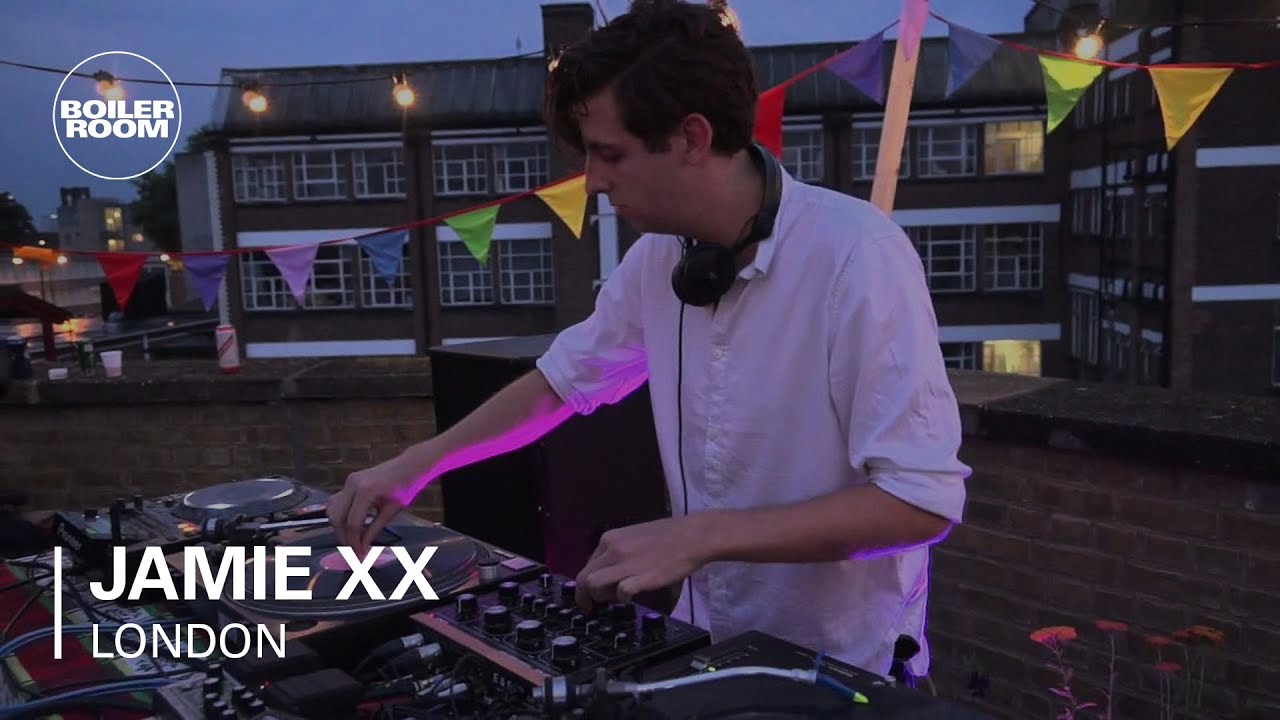
) using rottary mixer.Which is the difference between rottary mixers with for example pioneer etc mixers?
Rottary Mixers
Yesterady i saw a boiler room episode with jamie xx (
) using rottary mixer.Which is the difference between rottary mixers with for example pioneer etc mixers?
Rotary mixers are pretty much all analog, as opposed to the digital Pioneers (and most other new ones).
The one in that video is an E&S DJR-400, which is a high end boutique mixer made one at a time by hand. I think they’re around $2000 (possibly more now) with a lead time of over a year.
The first club DJ mixers were all rotary, made more or less custom at first, then by people like Bozak and Urei. They’re one of the iconic things from the disco era, coming just after people realized radio desks weren’t the best things to use in clubs.
As far as differences in spinning…they are a lot simpler to use. They don’t have crossfaders. Most don’t have per-channel EQs (the DJR-400 does, but only 2 bands). A lot have a 3-band master EQ. Most have really simple cueing systems, just one source selection…no split cuing, and no way to blend the master signal into a cued channel (Bozak AR-6 and rane mp2016s and 2016a can blend in the master). Most have 6 channels, a couple boutique ones have 2 or 4. Also, when they came out, they tended to sound a lot better than the line fader mixers of the day because they were made out of better components.
The “fader” curve is also totally different. Most don’t have per-channel gain controls, so “full volume” winds up at around 7 (if it has numbers), and you bring up quieter tracks by turning the knob further. They also kick in a lot lower…basically as soon as you touch the knob, you can hear the track (though it’s really quiet).
Because of that, lots of people think they’re better for long, smooth mixes. It’s obviously not like you can’t do smooth mixes on a line fader mixer, but that’s one of the draws.
Personally, I’ve always wanted one. I think they’re gorgeous in their simplicity, and the combination of not being able to slam faders and having more usable range on the level controls seems like it would fit better with how I want to mix. The times I’ve mapped controllers to traktor’s mixer to behave like a classic rotary were some of the most enjoyable mixes I’ve done, even with the terrible, small knobs.
I’d buy a DJR-400 in a heartbeat if I ever got the chance, even though I’d have to have it modified to make it what I’d want (bypass the channel EQs and the phono preamps, so I could run 4 line sources and just buy discrete preamps for my 1200s).
I think I’m going to buy a rane mp2016s by the end of the year. It does have channel gains, which I don’t really like, but it doesn’t have channel pan controls, which seem to exist just to screw you up. And it has a modern cueing system that I like, but I wouldn’t say no to an AR-6 if I figured out how to buy one…the design is (IMHO) even better…I just can’t figure out when they actually sell them or how to buy one without paying in GBP, plus VAT and international shipping.
They’re really just a different kind of mixer, and one I really like, at least enough to try.
ETA: Also, that was a really fun set. Not all my style, but fun.
Thank You very much mostapha!
You could always play a set using only a twister mapped as the mixer for that rotary feel…
Agreed. I’ve done that. If the controller is good enough, it’s close.
Now, I’m also the weird guy who prefers digital summing (I’ve blind A/B’d good examples of both) but also rotary mixers.
The thought of spending $1400-2000 on a nice rotary seems dumb compared to building a midi controller that will be smaller and easier to transport. I’m just not the least bit confident in my ability to build one.
Big fan of rotary mixers. I guess you can get a controller to mimic it to an extent… But, a big part of the appeal comes from the actual sound quality (not to start one of those debates  ). The Rane almost made its way into my rig…and, may still find it. A rep told me a few years ago it may get discontinued, but still seems to be available. The other I am considering is a xone 92 with the rotary knobs.
The only factor is portability for me…my gigs require my own sound system and rig so I like to keep it as minimal as possible.
But, if they do happen to discontinue either the 2016 or the 92R or I pick up more gigs where I dont bring a sound system, you my find me pull the trigger just to get my hands on one 
How’s Rane Empath in a rotary version? Anyone have first hand experience with it?
I love flipping faders way to much to have any desire to play on one of these!
I’ve seriously considered one multiple times…at least a few times a year since I started spinning. I’ve handled them and played on a linear version but not played on a rotary.
They feel…weird. Definitely quality, but they feel like what they are…battle mixers with rotaries for some reason. It is more flexible just because it has a crossfader and channel EQs, so more people will be happy using it. It’s like paradise garage, warehouse, and grandmaster flash had a 3 way…which is actually kind of a cool idea.
They sound amazing, like all rane mixers…definitely more on the clinical side than the warm side, though. I think that’s a bonus…some prefer pleasing distortion. If I wanted that, I’d run it through something else later depending on the sound I wanted…you can’t make something cleaner once the distortion is there.
That is a superb set.
Here’s one by Panotaker on DJF (and possibly here as well, not sure) that I just watched.
In fairness and to be clear, THIS IS NOT ME MIXING, it’s Panotaker.
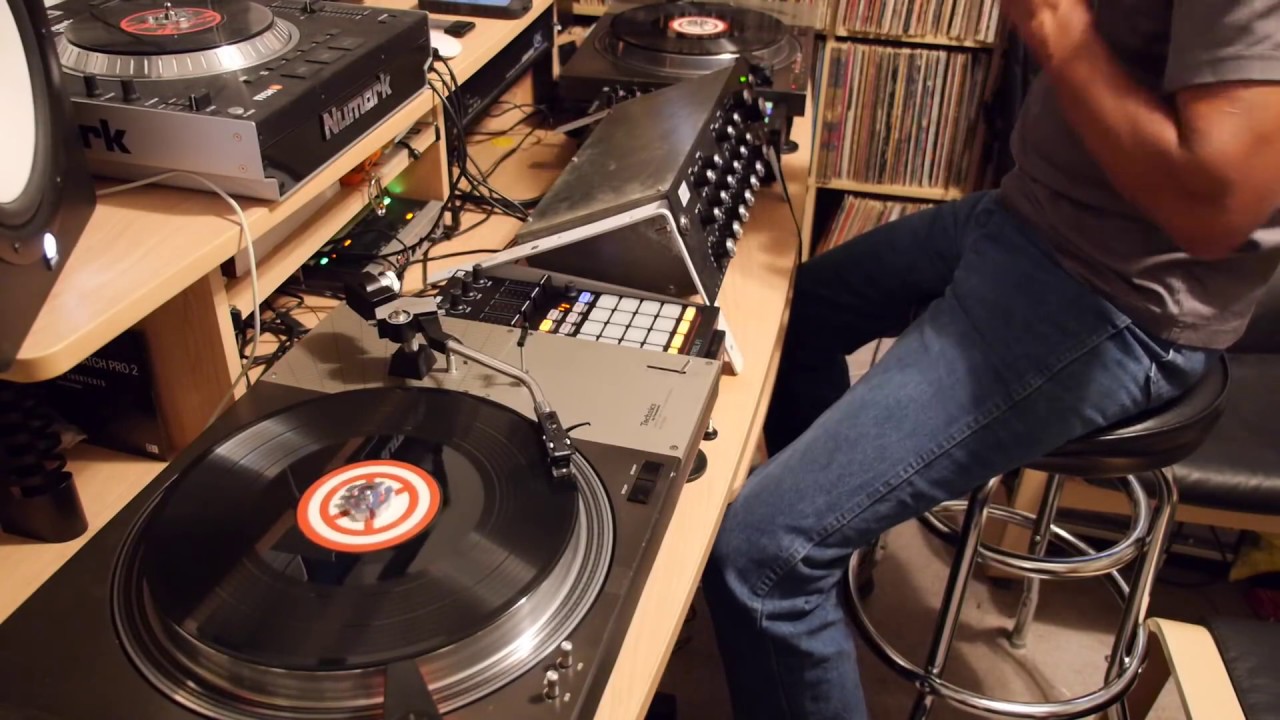
[quote=““Youtube Description””]
This is the first part of a mix I did when I played at the Alamo City Disco Ball #4 in San Antonio Texas. I didn’t get a chance to record it at the event, so I duplicated it at my house. Two 40 year old Technics SL-1100A’s turntables, and my fully restored antique Bozak rotary mixer. I am using Traktor with a Native Instruments Audio 10 sound card.
[/quote]
This is the thread we’re discussing it in.
I’m quite impressed. Some of the tricks he’s doing (like the double echo) are things I “learned” not long after I started spinning…and discounted because they didn’t sound right. Apparently the problem was learning from people who used a crossfader as a clutch.
I think I just pushed up my schedule for buying a rotary. Also, mostly thanks to talking to him, I’m just going to get an mp2016s. It seems that the differences in sound quality between the top end rotaries is somewhere between splitting hairs and choosing whether you want “good distortion” or “clinical”, and only the 2016a/s and the AR-6 seem to have the cue system I want.
Personally, I’ve always come out on the side of preferring “clinical” sounds in everything but guitar amps, even in blind ABX tests (Pro Tools summing vs. a Vintage Neve desk, for example). It costs only money (hardware) or latency (software) to add in the awesome-sounding, mild, nonlinear distortion. But once it’s printed on a recording or in the live sound, you can’t take it away.
Definitely keep us posted on this. If that one turns out well I could see myself lusting for it, too.
You won’t be disappointed with the 2016S… the sound quality is tops. I would look for the later “S” model, though. I heard the power supply was internal and improved over the earlier models.
Still think I may grab one of these eventually, too. Good Luck!
They’re on amazon marketplace and GC can order them. Rane is still making them, they’re just not stocked many places.
I have mixed feelings about the internal supply. I obviously trust rane to do it right, but it’s also one of the things that can increase noise.
An Australian company Condessa Electronics is making some sweet rotary’s here is the latest version with 2 band eq. Apparently an Iso version is in the pipeline also -
Photo of the mixer -
Here’s the link to the black one: http://www.condesaelectronics.com/product/carmen-in-black-3/
They’re supposed to be nice, but I’m pretty sure they use ICs. That’s fine from a quality/sound perspective, but it might make repairs difficult, unless you happen to be an Aussie. They’re also made by hand…like, by a guy. It’s pretty cool.
I actually like it a hell of a lot, though. The only problem for me is the cueing.
The mixer is supposed to be very quiet. I believe the ‘s’ and ‘a’ models both have internal power supplies… The ‘s’ being an ‘improved’ version. I agree about the cuing… I am so used to having the blended cue as opposed to split cuing. Hearing is not the same in both ears for me after all of these years. :-/
The only difference between the a and s is the internal power supply. It happened a couple years ago.
Both of them have the slightly better pots (compared to the original) that has unity gain at 8 instead of 10. So, in a technical way, they’re both superior to the original (if you use it like a rotary was intended).
Supposedly it’s very good. One of the local dudes from Leipzig apparently had a pre-production unit and I heard it was quality.
Here is my take on rotaries. Number one spot would have to go with the Rebuilt Bozak by Buzzy Beck. Mainly because Buzzy was one of the persons that help design it, and he can rebuilt it to sound like the original, or better than the original. When he rebuilt mine, I went with better, than the original. He also uses brand new, Black Alps pots, like the original Ureis, and those pots are design to last millions of cycles. The mixer has no IC’s in it, so theoretically, it can be rebuilt indefinitely, until rotary pots are no longer available. It is also the first rotary, and it was design right the first time. 40 years later, it is still the most popular and desirable rotary. The only real draw back is no booth out, although they did make a few with booth out, and those are even rarer. When Buzzy is finally gone, look for those Buzzy Beck Bozaks to double or triple in price, compared to a Bozak that was rebuilt by somebody else.
Second place would go to the original Urei 1620. They added a couple of more channels, and the booth out. Only downside is that it has IC’s in it, still sounds just as good though.
Third place would go to all the Bozak and Urei clones. From the AR6 to the Rane to the Urei LE and all the other 19 inch mixers out there.
Fourth, all the new portable mixers, like the DJR400, the Contessa and a few others, including the Bozure kits. If you need a portable rotary, then it would be Number one on your list. Or if you don’t want a rebuilt 30 year old mixer, and would prefer a brand new mixer. Their advantage is that they are portable, brand new, and some come with isolators.
Fifth would be all the off the wall rotaries like a few Vestax mixers, and Pioneer mixers that have been converted to rotaries.
I probably left some out that I forgot about, like the V6 that is so expensive that I wouldn’t even want to wear it out, and i think I left out a Japanese mixer that is also supposed to be excellent. I also left out the best rotary mixer that I ever used, because they where only made in Houston Texas, and i believe there where only about 10 ever built, and there are no more left to be found, and believe me, I have looked. Unfortunately, I am the only person I know that is still around that has ever used one. They where hand made into a big DJ console, by a guy named Erath, he is famous for making speakers, and his speakers still demand big bucks. The mixer had knobs that where about 4 inches around. The mixers where built into a custom DJ console, so you couldn’t take it out and move it, or replace it with something else. As the discos slowly closed down, they where probably trashed. The closest I got to finding one was when I got his email address, but by that time, he was in his 90’s, and I never got a response to my emails. He died shortly there after, and so did all the hopes of finding one. The mixer had 3 pots with those big ass 4" knobs. 2 for the turntables, and one for a tape deck. That was one smooth sounding mixer, and the mixes that came out of it where buttery smooth, if you did your beat mixing right. I would do just about anything to have one again. Rumor has it that he copied The Bozak. I think the mic pot was also the pot for the microphone, but i really don’t remember how the mic worked. If you ever find one, call me.
Fifth would go to the off the wall rotaries like the Vestax